
Metal Additive Manufacturing
What type of metal additive manufacturing do we offer?
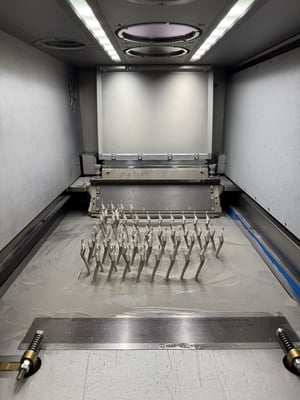
Kapstone Manufacturing prints metal parts by laser powder-bed fusion on an SLM 280 2.0. We print 316L and 17-4PH stainless steel in-house and source additional alloys, such as Ti6Al4V ELI (Grade 23), CP titanium (Grade 2) and cobalt chrome, through our approved supplier network. Parts can be finished, inspected and documented under the same ISO 13485-certified quality system, from prototype to production.
Who do we serve?
Our foundation is built on decades of medical device development and manufacturing experience with our sister business, Kapstone Medical. We brought metal additive manufacturing in-house to serve our clients' needs for faster prototyping during development and the ability to scale to production for the right applications.
-
Medical Device Companies: Prototyping and production of stainless steel surgical instruments, guides and other device components. Sourcing of CoCr and Ti components for implants through our approved suppliers, managed under our ISO 13485 quality management system.
- Subsea, marine, oil and gas: Corrosion-resistant stainless steel housings, connector bodies, ROV tooling, flow components, and downhole tool components.
- Other regulated industries, i.e. Aerospace and Defense: companies who need stainless steel prototyping services or low criticality applications such as custom brackets, fixtures and tooling, low-volume replacement parts, housings, etc.
Equipment and materials
| Specification | SLM 280 2.0 |
| Process | Laser Powder Bed Fusion of Metals (PBF-LB/M) |
| Optics | Twin 400 W IPG fiber lasers |
| Build envelope | 280 x 280 x 365 mm |
| Layer thickness | 20-75 µm |
| Minimum feature | 150 µm |
| Printed in-house | 316L and 17-4PH stainless steel |
| Sourced through approved supplier network | Ti-6Al-4V ELI (Grade 23), CP titanium (Grade 2), cobalt chrome, others on request |
From design to finished part
We can start from a concept and help you develop a manufacturable product, or we can evaluate finished designs and set up and manage production, packaging, and logistics for your company.
- Design for Additive Manufacturing: Before your design and specifications are finalized, our engineers can help guide decisions on material, wall thickness, build orientation, support strategy, and post-processing that will drive manufacturability and cost in production.
- 3D Printing through the laser powder bed fusion process.
- Powder removal from the finished build.
- Heat treatment, as required for stress-relief or material properties.
- Removal from the build plate typically by wire EDM.
- Support removal.
- CNC Machining of critical features and tolerances
- Finishing: Media blasting, vibratory and mechanical finishing, DLyte dry electropolishing to below 0.1 µm Ra, passivation.
- Cleaning and laser marking.
- Dimensional and visual inspection.
- Packaging and sterilization
When metal additive manufacturing makes sense
Laser powder bed fusion offers flexibility to prototype and iterate without hard tooling, produce complex geometries, internal channels or lattices, consolidated assemblies, and low-to-moderate volumes where hard tooling is not justified. CNC machining remains the better choice for simpler geometries, some very tight tolerances and higher volumes. Kapstone Manufacturing is process-agnostic, and we will recommend the production methods that fits the application and your requirements.
Quality and documentation
Kapstone Manufacturing's quality system is certified to ISO 13485:2016. Production parts ship with documentation matched to the part and its application, which can include process qualification and validation records, material certifications, traceability records, inspection data, and finishing records. The quality agreement for each program defines the required package.
Example: DanaMed Pathfinder ACL Guide
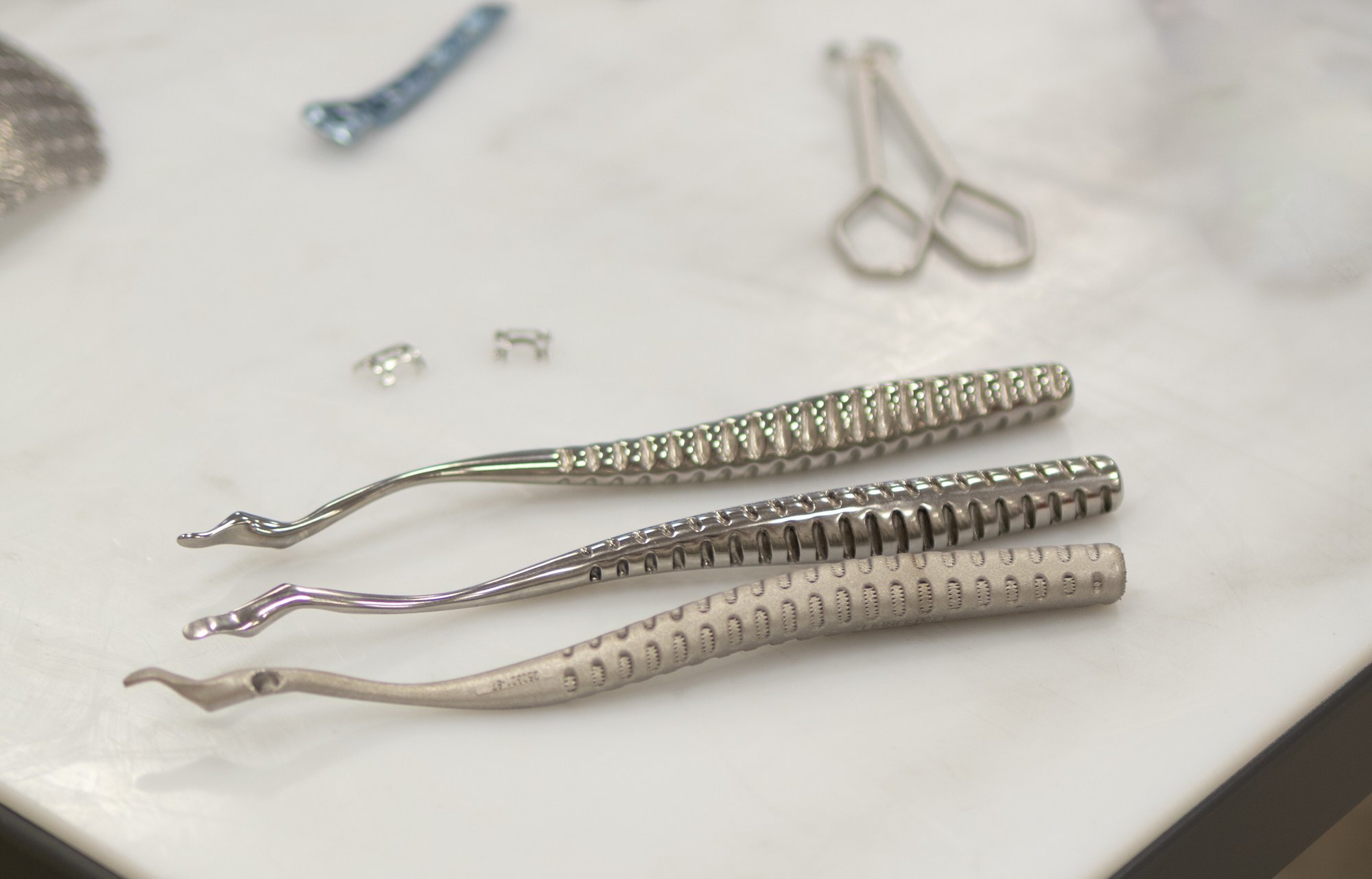
For DanaMed, a Charlotte medical device company, Kapstone Manufacturing produces a reusable surgical guide in 316L stainless steel. Stainless steel parts like this guide can be printed on the SLM 280 and finished to a mirror surface with DLyte dry electropolishing, with printing, finishing and inspection under one ISO 13485 quality system.
FAQs
We print 316L and 17-4PH stainless steel in-house by laser powder-bed fusion. Additional alloys, such as Ti6Al4V ELI (Grade 23), CP titanium (Grade 2) and cobalt chrome, are available through our approved supplier network.
The SLM 280 2.0 has a build envelope of 280 × 280 × 365 mm, layer thicknesses of 20 to 75 µm and a minimum feature size of about 150 µm.
Metal 3D printing is usually the better choice for complex geometries, internal channels or lattices, consolidated assemblies, and low-to-moderate volumes where tooling is not justified. CNC machining is usually better for simpler geometries, some very tight tolerances and higher volumes. We recommend the method that fits the part.